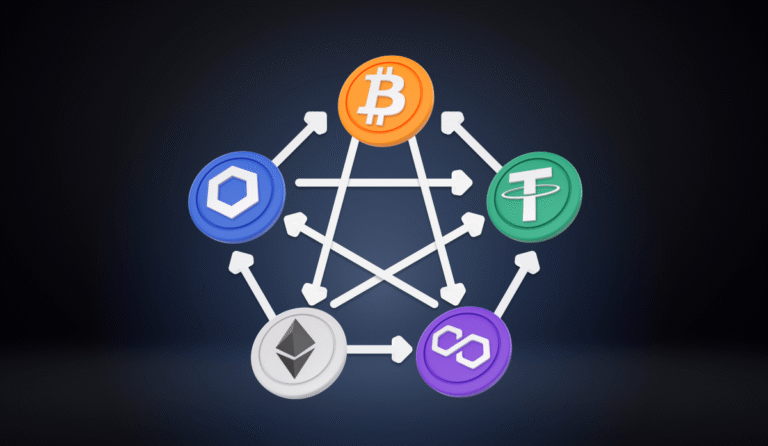

Blockchain technology is rewriting asset management by enabling real-time visibility, tokenized ownership, and interoperable data flows across exchanges, custodians, and protocols. In this framework, portfolios are updated instantly as markets move, and provenance is auditable through governance-driven controls. The result is improved valuation, risk signaling, and allocation analytics at scale. The implications for strategy, custody, and compliance are substantial, inviting further examination of how ecosystems, liquidity, and governance must evolve to maintain resilience.
How Tokenization Enables Real-Time Portfolio Tracking
Tokenization converts asset ownership into transferable digital tokens, enabling real-time portfolio visibility across disparate markets. In this framework, data streams from exchanges, custodians, and protocols converge, delivering instantaneous valuation, risk signals, and allocation analytics. Tokenization governance structures ensure verifiable provenance and access control, while liquidity milestones mark scalable adoption. Decision-makers gain autonomous insight, aligning strategies with transparent, borderless asset ecosystems.
Compliance, Custody, and Risk in a Tokenized World: A Practical Checklist
As asset flows increasingly move onto tokenized rails, governance, custody, and risk management must evolve in lockstep to sustain trust and operational integrity across borders.
The checklist centers on compliance risk assessment, transparent reporting, and robust custody strategy implementation, covering key controls, third-party assurances, data lineage, and incident playbooks.
Guardrails enable scalable, auditable tokenized asset portability and resilient risk posture.
Adoption Playbook: Strategy, Ecosystems, and Next Steps
A clear adoption playbook translates strategic intent into actionable momentum, detailing how organizations select ecosystems, align stakeholders, and sequence initiatives to maximize time-to-value.
The playbook emphasizes disciplined strategy alignment and disciplined risk-aware planning, mapping decisions to measurable outcomes.
It champions ecosystem collaboration, data-driven milestones, and rapid iteration, enabling independent teams to move with autonomy while maintaining coherence across the asset-management technology landscape.
Freedom through structured execution.
See also: Common Challenges Facing the Ethereum Network
Staying Ahead: Measuring Impact and Iterating the Tokenization Strategy
Blockchain-enabled asset platforms hinge on not only deploying tokenization at scale but also continuously assessing its impact. In this phase, practitioners collect risk metrics, benchmark outcomes, and quantify liquidity effects to inform iterative adjustments. Governance models evolve through transparent oversight, data-driven decisioning, and adaptive controls. The objective is durable competitive advantage while maintaining compliance, resilience, and strategic freedom for stakeholders.
Conclusion
Blockchain-enabled asset management will continue to compress settlement times, increase visibility, and unlock granular risk analytics as tokenization scales across assets and jurisdictions. The architecture—tokenized ownership, real-time valuation, and interoperable data feeds—drives faster decision-making and more resilient governance. An anachronism—an old-world bell tolled in a data center—emphasizes the leap from opaque ledgers to transparent, automated ecosystems. The next phase hinges on scalable liquidity, robust custody, and transparent compliance to sustain competitive advantage.